Eau de Vie - Fri. Dec 2 - 8PM

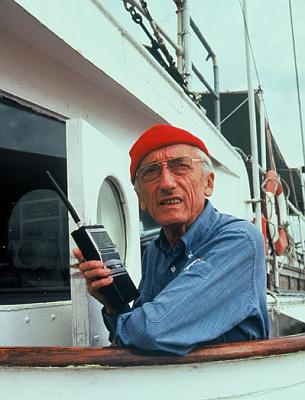
Guest curator Soumyaa Kapil Behrens and Oddball Films present Eau de Vie and Other Aquatic Tales, an evening of films on H2O and other fluid adventures.  Submerge yourself in these sojourns - some scientific, some silly, and all a little slippery.  The night would not be complete without an underwater visit from the most important filmmaker to ever traverse the seas: The Green Sea Turtle With Jacques Cousteau (1970) visits with one of our oldest marine friends, a 400lb turtle. Journey along the edge of the earth with Jay Coggeshall as he searches for a connection with a culture of people who live deep within the Arctic Mirror (1977)Aqua Frolics (1950) delights with a series of absurd vignettes all requiring you to hold your breath and Liquid Air (1950) revisits the popular science series, “John Kieran’s Kaleidoscope”, with experimental demos and discussions.  Journal Films Inc. brings us Geysers, Lava and Hotspots and Water (1961), both use beautiful animation and live action to explain, educate and excite audiences about the natural and necessary phenomena of water and it various incarnations on earth. And, Living Things in a Drop of Water turns the lens closer; taking a myopic look at the cellular party that goes on in this teeny tiny unit of life. 


Date: Friday, December 2, 2011 at 8:00PM
Venue: Oddball Films, 275 Capp Street, San Francisco
Admission: $10.00 - Limited Seating RSVP to 415-558-8117 or programming@oddballfilm.com 


Program Features:


Liquid Air (1950, B+W)
Fifteen minutes of fun used to be the norm with shows like John Kieran’s Kaleidoscope (1949-1952). With episodes that focused on unraveling the mysteries of earth in sizable chunks of time, Kieran, a quiz show panelist and noted intellectual was our guide to the unknown.  This particular short explores the magic of gas and liquid with on screen experiments and candid conversations. 


Arctic Mirror (1979, color)
Jay Coggeshall and his female friend take their camera on a six-month trip into the Arctic Circle to meet the people who live there.  Walking and kayaking across hundreds of miles, the couple learns about the land and the cultures that coexist on the top of the world. Filled with serenity and unusual imagery, this documentary is a unique transcript of life above the line. 


The Green Sea Turtle with Jacques Cousteau (1970, color)
Jacques Cousteau is a force of nature, a patron of the seas and an honorary amphibian.  Filmmaker, scientist, inventor, innovator, activist, scholar, diver and father, Cousteau is responsible for much of what we know about the liquid world that covers most of our earth.  This piece, part of The Undersea World of Jacques Cousteau, follows a lone 400 lb turtle as she treks across the ocean migrating one thousand miles.  Cousteau, known widely as “le Commandant” or “the Captain”, won a Palm d’Or at Cannes Film Festival for his work on The Silent World with Louis Malles in 1956. 

Geysers, Lava and Hotspots (1961, color)
Beautiful live action meshes with hand drawn renderings of how these natural explosions take place.  Geological and geographical, this short by Journal Films Inc. gradually unveils it grand drawing as it takes on the amazing science of these flaming hot liquids that can’t help but eject from the earth.  Deconstructing the process from ground up, this is an informative look at how this simple earth science works with an artistic reward at the end.  

Aqua Frolics (1950, B+W)
This wet and wild compilation is full of fun and strange water activities.  A newsreel style staging of clowning around in a world where most people need gills, these vignettes are silly and somewhat surreal.  All things once thought normal go berserk when you add a little agua.  This film is a fun respite from regular news footage and sends a great message about imagination and the joy of performance art.  


Living Things in a Drop of Water (color)
Produced by Encyclopedia Britannica Films, this educational documentary magnifies all things small and un-seeable by the naked eye.  Travel deep inside a single drop of water to meet the thousands of things that thrive within it.  Taking things down to the cellular level, this documentary ponders the community of living organisms having a ball and procreating in something so small we can’t even hold in our hands.  

Water (1961, color)
Animator Phillip Stapp delivers with this piece commissioned by the United Nations and approved by the World Health Organization.  Another Journal Films Inc production, this documentary highlights Stapp’s interesting animation style combining and contrasting live-action footage and photographs with pointillist inspired drawing.  These airy images depict the problem of water rights, water shortage, and the needs of our ever-growing world with snappy style.  Stapp is well known for his work in animation with films like Boundary Lines (1946) which introduced his ‘evolving scroll’ efforts and work with music and lines.  Water is a retro reminder of our problem with life’s juice that has not yet subsided.  In a new world with 7 billion people, this film’s relevance is very contemporary to our time.  


Curator Biography
Soumyaa Kapil  Behrens is a filmmaker based in San Francisco.  Behrens is currently directing MY GARBAGE, MY NEIGHBORHOOD, a documentary film on the eviction and transformation of one of the oldest recycling centers in San Francisco located in Golden Gate Park.  She is also producing the feature film, BEYOND REDEMPTION, an anti-conventional western with women as unlikely heroes.  Behrens teaches film locally and has an MFA in Cinema Production from San Francisco State University.  


From Tea Leaves to Technology - Sat. Dec 3 - 8PM

Oddball Films presents From Tea Leaves to Technology: Britain’s GPO Films, a program of rare 16mm films examining culture and modernity produced by the UK’s legendary GPO Film Unit. The GPO employed some of the most influential directors of creative cinema including abstract filmmakers and animators such as Len Lye, Norman McLaren and Lotte Reiniger. The program features Song of Ceylon (1934), one of the most critically acclaimed films of the UK’s early documentary film movement produced by John Grierson (who would go on to found the National Film Board of Canada) and sponsored by the Empire Tea Marketing Board and the Ceylon Tea Propaganda Bureau. Song of Ceylon chronicles the exotic cultural and religious customs of the Sinhalese (now Sri Lankans) and the effects of advanced industrialism on their culture. This poetic and elegantly lensed film features inventive experimental sound montages interwoven with anthropological narration. Winner of best film at the 1935 International Film Festival in Brussels. Also screening will be Night Mail (1936).  This critically acclaimed film features the operation of the Royal Mail train delivery service showing its systematic stages and procedures channeling representations of modern technology and institutional practice into a study of the train as a powerful symbol of modernity. Night Mail borrowed from the aesthetics of Soviet cinema to turn an explanation of the work of the travelling post office into a hymn to collective labor. With a musical score arranged by Benjamin Britten and Alberto Cavalcanti, and rhyming verse written by the great poet W.H. Auden. Also screening will be This Is Britain (1942) a British propaganda short produced during World War II by the Crown Film Unit, an organization within the British Government's Ministry of Information to support the Allied war effort. The film depicts a day in the life of Britain during the blitz, and is noted for its nonlinear structure and inventive use of sound. It was nominated for the Academy Award for Documentary Feature in 1942. Finally The Oil in Your Engine (1969) a technologically innovative film about the properties of oil in automotive engines produced by the makers of the biggest petroleum disaster in history-British Petroleum. The psychedelic visuals and experimental soundtrack, combined with the innovatively framed shots makes their “science” of oil lubrication all the more bizarre.  Nominated for a BAFTA award (British Academy of Film and Television Arts).


Venue: Oddball Films, 275 Capp Street, San Francisco
Date: Saturday, December 3, 2011 at 8:00PM
Admission: $10.00 - Limited Seating RSVP to programming@oddballfilm.com or 415.558.8117


Program Features:


Song of Ceylon (1934, B+W)
The first part of the film depicts the religious life of the Sinhalese, interlinking the Buddhist rituals with the natural beauty of Ceylon. Opening with a series of pans over palm leaves, we then gradually see people journey to Adam's Peak, a centre of Buddhist pilgrimage for over two hundred years. This is continually intercut with images of surrounding natural beauty and a series of pans of a Buddhist statue. Part two focuses on the working life of the Sinhalese, again continually stressing their intimate connection to the surrounding environment. We see people engaging in pottery, woodcarving and the building of houses, whilst children play. The third part of the film introduces the arrival of modern communications systems into the fabric of this 'natural' lifestyle, heralded by experimental sounds and shots of industrial working practices. Finally, in the last part of the film, we return to the religious life of the Sinhalese, where people dress extravagantly in order to perform a ritual dance. The film ends as it began, panning over palm trees.

Made by the GPO Film Unit and sponsored by both the Empire Tea Marketing Board and the Ceylon Tea Board, Song of Ceylon is one of the most critically acclaimed products of the documentary film movement. It was hailed at the time of its release by author and film critic Graham Greene as a cinematic masterpiece, and received the award for best film at the International Film Festival in Brussels, 1935.
The film is a sophisticated documentary, notable for its experimentation with sound. It features crucial input from Brazilian Alberto Cavalcanti, who helped with the soundtrack, as well as composer Walter Leigh, who experimented in the studio to create a number of sound effects.

The film's soundtrack was carefully put together in a studio because technical limitations precluded the ability to record synchronized sound. Leigh constructed a number of 'exotic' sounds, reflecting ceremonial practice and interweaved them with anthropological narration. At times these sounds are disconcerting in the way that they are used: gong sounds, for instance, are treated and manipulated to increase their harshness. The most striking use of experimental sound occurs in the third section of the film, which depicts the effects of telecommunications systems on the native lifestyle. A montage of industrial sounds and electronic waves are mixed together, creating an expressive, yet rather dissonant, sense of the encroachment of modernity.

The third section of the film is the most disconcerting of the four sections and initially contrasts with the other sections. Yet overall the film is structured in a 'circular' manner, emphasizing that continuity can occur despite the onset of an initially alien way of life. The first two sections focus on native rituals and working practices, always stressing the Sinhalese in relation to their natural environment. The modernity of the third sequence initially implies that nature and tradition are endangered by advanced industrialism, but in the last section we return again to the natives partaking in another ceremony, while industrial sounds become merged with the 'traditional' sounds.    

Ultimately, then, Song of Ceylon imparts the message that nature and native traditions can coexist harmoniously with modernity. The film proposes a benign, rather than ruthless, message of progress, stressing the benefits of technological innovations. At the end of the film, the camera pans over palm leaves, while a gong sound is also heard, reprising images and sounds featured at the start.-Jamie Sexton

Night Mail (1936, B+W)
Night Mail is one of the most critically acclaimed films to be produced within the British documentary film movement. It was also among the most commercially successful, and remains the film most commonly identified with the movement. By 1936, film output at the GPO Film Unit was divided between the production of relatively routine films promoting Post Office services, and more ambitious ones experimenting with the use of sound, visual style, narrative and editing technique. Night Mail is firmly in the latter category.

Although it was primarily directed by Harry Watt, Basil Wright developed the script, and had overall production responsibility for the project. The resulting film was edited by Wright and Alberto Cavalcanti; John Grierson and Stuart Legg were also involved in its production. The music score was arranged by Benjamin Britten and Cavalcanti, and the rhyming verse used in the film - spoken by Pat Jackson - was written by W.H. Auden, who also acted as assistant director.


Night Mail is an account of the operation of the Royal Mail train delivery service, and shows the various stages and procedures of that operation. The film begins with a voiceover commentary describing how the mail is collected for transit. Then, as the train proceeds along the course of its journey, we are shown the various regional railway stations at which it collects and deposits mail. Inside the train the process of sorting takes place. As the train nears its destination there is a sequence - the best known in the film, in which Auden's spoken verse and Britten's music are combined over montage images of racing train wheels.


Although the narrative is concerned with issues of national communication and integration, the thematic centre of the film is more closely linked to representations of the regional environment. This elevation of the regional above the national is reinforced by the portrayal of the railway as separate from the metropolitan environment, and little attempt is made to link the railway and its workers with the city. The film also channels representations of modern technology and institutional practice away from an account of the industry of postal delivery, and into a study of the train as a powerful symbol of modernity, in its natural element speeding into the countryside.- Ian Aitken


Listen to Britain is a 1942 British propaganda short film by Humphrey Jennings and Stewart McAllister. The film was produced during World War II by the Crown Film Unit, an organization within the British Government's Ministry of Information to support the Allied war effort. The film depicts a day in the life of Britain during the blitz, and is noted for its nonlinear structure and its use of sound. The film was nominated for the inaugural Academy Award for Documentary Feature in 1942.


Documentary, public information film, morale booster; propaganda film - these are descriptions that could be applied to many of the 10 to 20 minute shorts that flourished and reached a peak of expression in the 1930s and '40s. Humphrey Jennings' films covered the whole of the Second World War in Britain. His quiet, emotive style produced some of the most memorable film images of the War; those from London Can Take It (1940), Listen To Britain (1942) and Fires Were Started (1943). Those titles, for the GPO and Crown Film Unit, were American funded and produced for American and British release.


Listen To Britain's title might suggest a strong sound element. There are the very recognizable sounds that one might expect in a wartime film: the evocative thunder of the 1000 horse power Rolls Royce Merlin engines of Spitfires and Lancasters, the cacophony of wartime heavy industry - tank factories, steel works, steam trains - but also the sounds of music; the egalitarian free classical music concerts, and radio; Workers' Play Time, musicians, Flanagan and Allen performing live at a lunchtime factory concert.


But it is the images, particularly the studies of people that are the real star. The gaunt, tired faces in this most desperate part of the war seem only slightly aware that Jennings' camera is there. In a factory, a young woman handles heavy precision metal drilling/cutting machinery, almost in a trance, her body and hands skillfully heaving the heavy equipment into precise position. At a concert, another young woman, standing against the wall alone, stares through or past the camera. She is defiant, self-assured, and independent. We know with hindsight that in the comparative austerity and repression of the immediate postwar period, women would not enjoy the same limited equalities, liberty and sexual freedom that they did in the war.

The editing in Listen To Britain is trademark Jennings: simple comparisons between scenes from everyday life and the manic, unreal struggle of the war effort. -Ewan Davidson


The Oil in Your Engine (1969) a technologically innovative film about the properties of oil in automotive engines produced by the makers of the biggest petroleum disaster in history-British Petroleum. The psychedelic visuals and experimental soundtrack, combined with the innovatively framed shots makes their “science” of oil lubrication all the more bizarre.  Nominated for a BAFTA award (British Academy of Film and Television Arts).

About the GPO Film Unit
The post office film unit established by Sir Stephen Tallents in 1933 will be forever associated with John Grierson and his idea of documentary cinema. During his spell in charge (1933-1937), Grierson oversaw the creation of a film school that he attempted to direct towards a socially useful purpose. J. B. Priestley remembered, "if you wanted to see what camera and sound could really do, you had to see some little film sponsored by the post office or the Gas, Light & Coke company."

This early strand of the GPO Unit's filmmaking is best represented by its 'masterpiece', Night Mail (1936), which borrowed from the aesthetics of Soviet cinema to turn an explanation of the work of the travelling post office into a hymn to collective labou\r. To quote Priestley again, "Grierson and his young men, with their contempt for easy big prizes and soft living, their taut social conscience, their rather Marxist sense of the contemporary scene always seemed to me at least a generation ahead of the dramatic film people."
However, the significance of Grierson's project at the GPO Film Unit would be more apparent in its eventual influence than its immediate impact. What is perhaps more important to stress is that this idealistic strand was not the only or, perhaps, even the most important part of its work.

The GPO Film Unit had been established as part of the post office's new public relations department. It was a typically experimental move. For much of the interwar period, the GPO was the largest employer in Britain: it had around a quarter of a million employees and was at the cutting edge of business organization and technological research. Thus, for example, massive government investment in the telephone network saw the production of instructional films such as Telephone Workers (1933), an early attempt to help train a large staff that was spread over several geographically distinct sites.

As well as creating a national communications infrastructure, the GPO was attempting to introduce commercial ideas of customer service into what was then a government department. Thus one job of the GPO Film Unit was to find ways to bridge the gap between the stern norms of communication in the Civil Service and popular understanding. The serious impulse behind entertaining musical fantasies like The Fairy of the Phone (1936) was an attempt to find new ways to communicate with the public. This was an essential requirement if you believed, as Stephen Tallents, the GPO's Head of Public Relations did, that popular expectations of government were evolving. As he put it, the idea of government as being negative was being superseded by the idea that government should be positive, moving from "the preventing of the bad to the encouraging of the good".
The work of experimental artists and filmmakers such as Lotte Reiniger, Norman McLaren and Len Lye can, then, be understood as part of a wider GPO project, exemplified by Giles Gilbert Scott's Jubilee Telephone Kiosk and the development of services such as the Speaking Clock and '999', to move government into closer and more harmonious contact with the British people.

First and foremost, the Film Unit was responsible for promoting the reputation of the GPO, emphasizing the scale and success of its technological ambitions. This task informed the bombast of films like the comparatively big budget BBC - The Voice of Britain (1935), as well as the internationalist idealism of We Live in Two Worlds (1937), which envisaged how new communications technology would herald the coming of a global civilization. This thematic technophilia was also reflected in the Unit's method, especially in the sound experiments organized by the Brazilian émigré Alberto Cavalcanti. Among the GPO's sonic achievements was the first use of recorded speech (6.30 Collection, 1934), modernist experiments in sound montage (Song of Ceylon, 1934) and the employ of now feted composers such as Benjamin Britten, Maurice Jaubert and Darius Milhaud.

This characteristic of the Unit's work became more evident after Grierson was replaced by Cavalcanti and a theoretical approach to 'realism' became less important than developing a variety of inventive and colloquial idioms. At the most obvious level, the Unit pursued celebrity endorsements - persuading cricketer Len Hutton and family to appear in What's On Today (1938), for example - but this approach also began to prompt interesting experiments in film form.

Harry Watt's The Saving of Bill Blewitt (1936) is often referred to as the first 'story documentary'. The film combined real locales and non-professional actors with a narrative based script. Let off the leash by Cavalcanti, Watt began consciously to blend the aesthetic and social commitment of the early Grierson documentaries with narrative devices borrowed from Hollywood. This resulted in the GPO's most theatrically successful production, North Sea (1938), which wore its 'educational' brief more lightly and made an overt attempt to entertain. According to Denis Foreman's memoir, such fusions later fascinated the Italian Neo-Realists.

Cavalcanti's reign also saw the production of Humphrey Jennings' masterful Spare Time (1939), an imaginatively edited catalogue of working-class Britain at play. Playful and humane, Jennings' delightfully undidactic film was exhibited at the New York International Exhibition of 1939 as an example of an emerging 'new Britain.'

On the outbreak of the Second World War, the GPO Film Unit became the Crown Film Unit, and its morale-boosting mode was effectively nationalized, a move which resulted in the production of patriotic wartime classics such as London Can Take It (1940), Target for Tonight (1941) and Listen to Britain (1942). Now led by the sensitive producer, Ian Dalrymple, this was perhaps the Unit's most triumphant phase, ironic considering the amount of governmental opposition that Tallents and the Film Unit had faced in peacetime.
Although the GPO Film Unit was eventually subsumed by the newly created Central Office of Information in 1946, and many of the filmmakers from its golden age migrated into commercial film production and television, the post office continued to make films. Early GPO efforts like Cable Ship (1933) and Under the City (1934) had found their audience among children and in the provincial village halls of various voluntary organizations; later post office films concentrated on these more narrowly defined educational purposes. Indeed, later children's programs such as Postman Pat were arguably the long-term result of the public affection for the post office which the GPO Film Unit had been established to embed some 50 years earlier.-Scott Anthony


Save KUSF Benefit featuring The Velvet Underground - Thurs. Dec 1 - 8PM


Oddball Films hosts a benefit for Save KUSF featuring a two-hour multi-media presentation on The Velvet UndergroundRichie Unterberger, author of the recent book White Light/White Heat: The Velvet Underground Day-By-Day, will present rare audiovisual material from throughout the groundbreaking group's career, including film clips; audio tracks; slides of photos from the book, telling the chronological history of the band; and expert commentary from the writer himself. Plus as a special bonus, rarely seen clips of Andy Warhol from Oddball Films' collection. 


Date: Thursday, December 1st, 2011 at 8:00PM
Venue: Oddball Films, 275 Capp Street, San Francisco (map)
Admission: $10-$15 Sliding Scale - Limited Seating RSVP to 415-558-8117 or programming@oddballfilm.com


Signed copies of the book available for purchase at a discount! 


More about the Author:
San Francisco resident Richie Unterberger is the author of numerous rock history books, including Unknown Legends of Rock'n'Roll and a two-part history of 1960s folk-rock, Turn! Turn! Turn! and Eight Miles High. His book The Unreleased Beatles: Music and Film won a 2007 Association for Recorded Sound Collections Award for Excellence in Historical Recorded Sound Research. His latest book is Won't Get Fooled Again: The Who from Lifehouse to Quadrophenia. Click here for more info. 


Strange Sinema 46 - Sat. Nov 26 - 8PM

Oddball Films presents Strange Sinema 46, a monthly screening of offbeat films, old gems and newly discovered oddities both entertaining, experimental and eye-opening, all culled from Oddball Films 50,000 film archive. This 46th installment includes A Ritual in Transfigured Time (1946), the High Priestess of experimental cinema Maya Deren’s sensual and metaphorically elusive study of the female psyche, Toot, Whistle, Plunk, Boom (1953), a “beatnik” influenced Academy Award winning short in stunning Technicolor, Trends (1967) a quirky, animated futurist film by Hungary’s first animated feature film director, Blowtop Blues (1945) featuring wild man Cab Calloway and Orchestra swingin’ through a great number, Experimental Psychology of Vision (1941), a way-out eye-popping film featuring phi phenomenon, visual other optical illusions, Help My Snowman is Burning Down (1964) Carson Davison’s award-winning beatnik rhapsody with jazz score by the Gerry Mulligan Quartet, A Lichtenstein in London (1968), a tour de force on site doc of the American pop artist’s famous Tate Modern show produced by Bruce Beresford featuring commentary by Lichtenstein, gallery views and shots of some of his most well known paintings and sculptures. Plus! Gay psychedelia! 

Venue: Oddball Films, 275 Capp Street, San Francisco
Date: Saturday, November 26th, 2011 at 8:00PM
Admission: $10.00 - Limited seating RSVP to programming@oddballfilm.com or 415.558.8117

Program Features:

A Ritual in Transfigured Time (1946, B+W, silent)
Maya Deren was one of the most influential female avant garde filmmakers of the 20th century. She was dancer, choreographer, poet, writer and photographer. In the cinema she was a director, writer, cinematographer, editor, performer, entrepreneur and pioneer in experimental filmmaking in the United States. She collaborated with Marcel Duchamp and her social circle included the likes of Andre Breton, John Cage and Anais Nin. 
This enigmatic film is a social event choreographed in the manner of a dance, illuminated by concepts drawn from Greek legend. This is a sensual and metaphorically elusive study of the female psyche often considered one of filmmaker’s most intriguing works.
For more info on Deren’s remarkable career click here.

Toot, Whistle, Plunk, Boom (1953, Color)
This Academy Award winner is in stunning Technicolor and a “beatnik” classic of mid-century animated design. It’s been ranked one of the top 50 greatest cartoons of all time.

Trends (1967, Color)  and Sisphus (1974)
Originally titled “Tendenciar”, this thought-provoking animated short was produced by the acclaimed Pannonia Film Studio in 1967. It was directed by Marcell Jankovics, the director of Hungary’s first full-length animated feature, as well as the Academy Award nominated short Sisyphus. Aside from a short introduction by a narrator, the film contains no spoken dialogue. Instead, it uses inventive images and music to speculate on the trends of the future—possible future trends in anatomy, human sexuality, communication, and other futuristic predictions are depicted. Sisyphus is an artistically spare depiction of the Greek myth of Sisphyus, sentenced to eternally roll a stone up a mountain. The animated story is presented in a single, unbroken shot, consisting of a dynamic line drawing of Sisyphus, the stone, and the mountainside.

Blowtop Blues (1945, B+W)
One of the great jazzy entertainers, A talented jazz singer and a superior scatter Calloway’s wild gyrations and on-stage showmanship at the Cotton Club sometimes overshadowed the quality of his always excellent bands. This rarity includes some real heavy hitters of early jazz including Cab Calloway and his Orchestra - Cab Calloway, vocal and leader; Russell Smith, Paul Webster, Jonah Jones, Shad Collins, trumpets; Tyree Glenn, Quentin Jackson, Keg Johnson, Fred Robinson, trombones; Hilton Jefferson, Andrew Brown, alto saxes; Ike Quebec, Al Gibson, tenor saxes;  Greely Walton, baritone sax; Dave Rivera, piano; Danny Barker, guitar;  Milt Hinton, string bass and J.C. Heard, drums.


Lichtenstein in London (1968, 
Color)
Having just been informed that a 1961 painting by the late pop artist Roy Lichtenstein  “I Can see the Whole Room! ….and There’s Nobody In It!’  has just sold for $43 million dollars Oddball thought it might be a good time to screen this British Film Institute Bruce Beresford directed film shot at the Tate Modern show in London in 1968. This film records the impact of American artist Roy Lichtenstein's (b.1923) work on the public and their reactions to it in the context of a retrospective exhibition at the Tate Gallery, London, which attracted unprecedented attention and proved one of the most popular ever held there. Shows his early paintings based on magazine ads and comic strip cartoons, such as Stove 1962 and Whaam! 1963, groups of girls' heads and landscapes and several sculptures. Commentary juxtaposes remarks by the public approving, questioning, or even rejecting the work, with extracts from previously recorded interviews with the artist made by the critics Alan Solomon for WNET, New York, and David Sylvester for the BBC. 

$43 Million? Learn to draw and do the same thing - click here.


Help, My Snowman’s Burning Down (Color, 1964) This Academy award-nominated short (and winner of 14 international awards) by Carson Davidson stars Bob Larkin (later in the cult film Putney Swope) as a Beatnik who lives on a boat dock off Manhattan with only bathroom furnishings.  A visceral tapestry woven together by stop motion and surreal special effects, this film is an Oddball audience favorite.  With original jazz score by the Gerry Mulligan Quartet.


Experimental Psychology of Vision (1941, B+W) is a way-out eye-popping film featuring phi phenomenon, visual  tricks and other optical illusions. 

Starlet Revue (B+W, 1929)
This all kiddie dance review pulls out all the stops1929 style! This is the first film to feature the Meglin Kiddies dance group—the dancing troupe that launched the careers of Shirley Temple and Judy Garland! Child dancers perform a pas de deux, a line dance, and other styles. 


Trance Cinema - Fri. Nov 25 - 8PM

Oddball Films presents Trance Cinema, An Evening of Ritual and Trance Films from Bali and Indonesia. This program showcases remarkable, rarely seen award-winning films plus unique shorts exploring the unique cultural rituals and ceremonies of Bali and Indonesia. Films include Trance and Dance in Bali (1937-39), Island of the Spirits, Ma’Bugi: Trance of the Toraja, A Balinese Gong Orchestra (1971) and the cinema curio Belles of BaliTrance Cinema is part of a series of ongoing film programs exploring ritual, higher consciousness and altered states of awareness.


Date: Friday, November 25th at 8:00PM
Venue: Oddball Films, 275 Capp Street, San Francisco
Admission: $10.00 Limited Seating - RSVP to: 415-558-8117 or programming@oddballfilm.com


Featuring:
Trance and Dance in Bali (1937-39) The film was produced by Gregory Bateson and Margaret Mead and records a performance of the Balinese ceremonial kris (dagger) dance-drama, which depicts the never-ending struggle between witch (death-dealing) and dragon (life-protecting), as it was given in the village of Pagoetan in the late 1930s. The dancers experience violent trance seizures, turn their krises against their breasts without injury, and are restored to consciousness with incense and holy water. Narrated by famed anthropologist Margaret Mead against a background of Balinese music. This “ecstatic ethnography” was an extraordinary effort to use film and photography in the field, and the precursor to much of the visual anthropology that has gone on since then

Island of the Spirits (1970s)
Among the Hindus of Bali, cremation is thought to release the soul for its journey to Nirwana. The joyous and spectacular ceremony shown in Island of the Spirits is reserved for high-born princes today. Hugely costly, the preparations for the cremation of Prince Sudharsana include the building of fantastic effigies and a tower nine stories high. Eight hundred men carry the tower in procession through the hundred thousand celebrants. The body of his small granddaughter and the souls of twenty-seven villagers accompany the prince. At the close of this long and auspicious day, when towers and effigies together with coffins, food, money, and incense have long been consumed by flames, when the crowds have departed, the ashes of the dead will be cast into the sea. Only then will the newly liberated spirits rise unrestrained to join the heavenly soul of all the universe, Nirwana.

Ma’Bugi: Trance of the Toraja This film depicts an unusual trance ritual that functions to restore the balance of well-being to an afflicted village community. The film communicates both the psychological abandon of the trance state and the often neglected motivation underlying activities such as the ascent of a ladder of knives and the supernatural curing of the chronically ill. Ma’Bugi portrays the song, dance and pulsating tension that precede dramatic instances of spirit possession in the Toraja highlands Sulawesi (Celebes) Island, Indonesia.

A Balinese Gong Orchestra (1971)
A film explaining the famous "Gamelan Gong" that includes the orchestra Tunjuk. Each instrument is described and explained, then the orchestra performs a piece taken from the Ramayana ballet suite (written in the 1950s and based on traditional themes). An excellent introduction to this kind of strange and exciting music to Western ears.

Belles of Bali (1930s)
An unusual curio examining the female culture and day to day activities of “exotified” Balinese women.


An Evening With The Insane - Fri. Nov 18 - 8PM

Oddball Films and curator Neil Van Gorder present An Evening with the Insane. This program of freshly unearthed rarities from Oddball Films’ 50,000-reel film archive will make you feel like you’re insane, think that the filmmaker is crazy, or plainly demonstrate some very bizarre behavior. Filled with cockeyed screen gems, some of the evening’s highlights include Free Fall (1964), by the brilliant, but troubled auteur Arthur Lipsett, Holy Ghost People (1967), Peter Adair’s legendary verite doc showcases  a West Virginia Caucasian Pentecostal congregation whose religious fervor includes trances, speaking in tongues, and rattlesnakes, You Don’t Die Here (1972) Jon Else’s open-ended documentary showing Death Valley, Calif., as a cruel and sublime landscape in which strange and eccentric desert-dwelling residents poetically reminiscing about the past, and Make a Wish (1972), a man sings a song about making a wish as psychedelic animations and montage editing make you feel like you stepped into the mind of a happy Lars von Trier. You’re sure to raise an eyebrow at one of the strangest films in the collection, Beat Me, Daddy (1943) features boogie woogie pianist Maurice Rocco performing “Beat Me, Daddy, Eight to the Bar.” Trips to the dentist will never be the same after watching Toothache of a Clown (1972), and learn the colors of the rainbow through the kaleidoscopic transforming blobs of Hailstones and Halibut Bones (1963). Plus much more! Get off your rocker and join us for what will surely be a mind-bending evening. 

Date: Friday, Nov. 18th, 2011 at 8:00PM

Venue: Oddball Films, 275 Capp Street, San Francisco (map)

Admission: $10.00 Limited Seating RSVP to: 415-558-8117 or programming@oddballfilm.com


Featuring:

Holy Ghost People (Reel 2) (1967, 22 mins, B&W)
This film is a documentary of a Caucasian Pentecostal congregation whose fundamentalist philosophy encourages a literal interpretation of the Bible. Reveals the religious fervor, the trances, the phenomenon of glossolalia (speaking in new tongues), and the use of rattlesnakes. Filmed by Peter Adair. This film was rightly hailed by Margaret Mead as one of the best ethnographic films ever made, and a staple of classes on anthropology and documentary film, this study of a little-known sect who put their lives on the line for their religion still packs a wallop four decades after its release.


You Don’t Die Here (1972, 19 mins, color)
Jon Else’s open-ended documentary showing Death Valley, Calif., as a cruel and sublime landscape in which  with strange and eccentric desert-dwelling residents poetically reminiscing about the past.


Make a Wish  (1972, 8 mins, color)
A man with an acoustic guitar sings a song about making a wish as a very quick, cool montage of images begins which includes animals in slo-motion, rodeo clowns, glass blowing, astronauts in space, fireworks, and cool psychedelic animations. This film was made as one of a series of short films to broaden children's awareness of the world around them, but feels like you've stepped into the mind of a madman.

A Dream of Wild Horses aka "Le Songe des Chevaux Sauvages (1962, 10 mins, color) This landmark short film is a cinematic poem which uses slow motion and soft focus camera to evoke the wild horses of the Camargue District of France, showing them as they roam on the beach through fire and water, biting and kicking one another. The raw yet elegant physicality of the horses in motion is breathtaking and euphoric.

Toothache of a Clown (1972, 10 mins, color)
Clowns are creepy the same way mimes are annoying. This film attempts to calm children's fear of the dentist by having a sad ass clown get his cavity filled. Watch our clown whine, accompanied by half-baked actors and cheap sets in this nitrous oxide-inspired nightmare!

Beat Me, Daddy (1943, 4 mins, B&W)
Features pianist Maurice Rocco performing the wild and raucous boogie woogie classic “Beat Me, Daddy, Eight to the Bar”, later performed by Commander Cody and the Lost Planet Airmen.

Hailstones and Halibut Bones (1963, 8 mins, color)
Celeste Holme reads the poem “Hailstorms and Halibut Bones” by Mary O’Neill that is about colors and the way colors can be described.  Uses animation with lots of flowers, smiley faces, and crazy transforming blobs to help us learn the colors white, red, green, black.

L.A. Too Much (1968, 10 mins, color)
A couple having sex is interposed over shots of the architectural details of a house. Strange noises fill the sound track.  Ultimately the old house succumbs to a violent death.

Free Fall (1964, 10 mins, B&W)
By the brilliant but troubled avant-garde filmmaker Arthur Lipsett (who committed suicide in 1986), Free Fall is, in the words of Lipsett himself, an “attempt to express in filmic terms an intensive flow of life – a vision of a world in the throes of creativity – the transformation of physical phenomena into psychological ones – a visual bubbling of picture and sound operating to create a new continuity of experience – a reality in seeing and hearing which would continually overwhelm the conscious state – penetration of outward appearances – suddenly the continuity is broken – it is as if all clocks ceased to tick – summoned by a big close-up or fragment of a diffuse nature – strange shapes shine forth from the abyss of timelessness.”